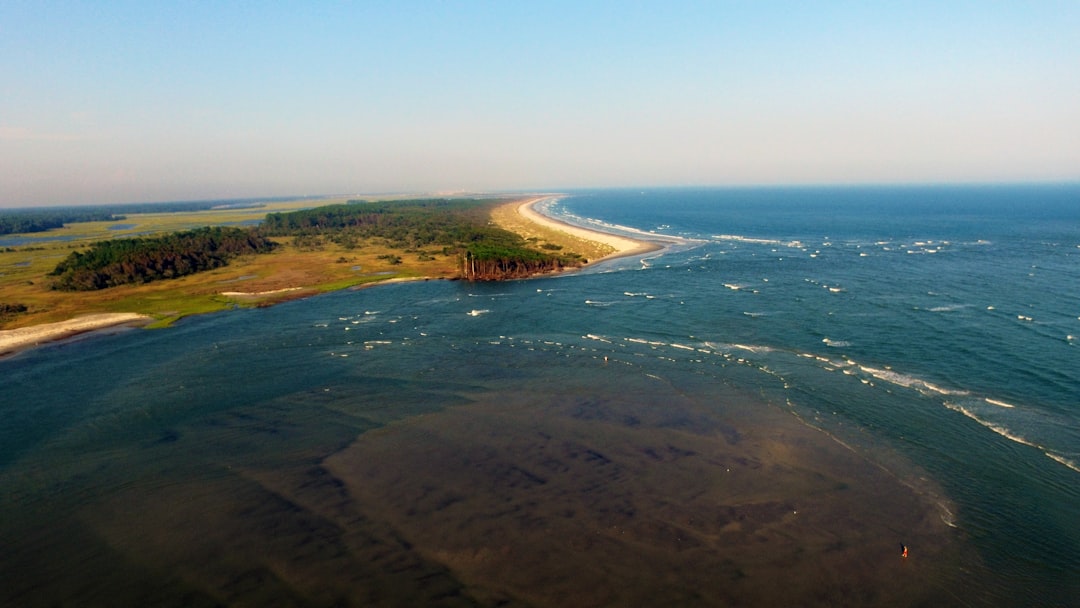
When environmental attorneys file a brief arguing that a county agency undercounted the damage to a shellfish habitat, that’s not a headline you skim past. That’s a due-diligence flag for anyone looking at property near those waters — especially along the Carolina coast, where oyster beds, tidal creeks, and development pressure have been bumping into each other for decades.
I’ve anchored off enough ACE Basin coves and poled through enough Beaufort County shallows to tell you: oyster reefs are not just scenery. They are load-bearing infrastructure for those ecosystems, and when a county environmental impact assessment gets challenged in court as having underestimated harm to them, the ripple effects reach well beyond the reef itself.
Here’s what this kind of dispute actually means for buyers and sellers, and what you should be checking before you get too far down the road on a coastal purchase.
What the Legal Challenge Is Really Saying
Environmental lawyers don’t file impact challenges because they have extra time on their hands. When a legal team formally argues that a county underestimated harm to oyster populations — typically as part of a development or dredging approval process — what they’re usually contending is that the baseline data was too thin, the modeling didn’t account for cumulative effects, or the mitigation measures proposed are inadequate for the actual scale of impact.
That last point is the one that matters most for real estate. “Mitigation inadequate to actual impact” often translates into permit revisions, project delays, or in some cases, a project getting sent back to square one. If you’re buying into a development that’s mid-approval, or buying a lot that sits adjacent to a disputed water-quality corridor, you’re buying into that uncertainty too.
The ACE Basin, the tidal marshes around Beaufort and Port Royal Sound, the creek systems behind Holden Beach — these aren’t abstract locations. These are places where permit disputes over shellfish habitat have stalled waterfront projects before, and where the underlying ecology is complex enough that a county’s initial impact estimate can genuinely miss the mark.
Why Oysters in Particular
Oysters are a canary metric. Their population density, health, and distribution tell scientists a great deal about water quality, sediment load, and the condition of the surrounding tidal habitat. They’re also legally significant in a way that, say, marsh grass is not — because shellfish harvesting is regulated at the state level, and water classifications that allow commercial or recreational harvest can be downgraded if habitat damage is documented.
A downgrade in shellfish harvest classification — from SA to SB, or from open to conditionally approved — can directly affect property values, dock permitting, and the character of a neighborhood. Last I checked, properties on creeks with open SA classification in Carteret and Beaufort Counties commanded meaningful premiums over otherwise comparable lots on restricted waters. That gap is worth confirming with a local appraiser, but the principle holds.
This is also why county wetland rule changes can cut into the economic viability of individual lots — the regulatory status of the water adjacent to a parcel isn’t static, and legal pressure on county impact assessments is one of the mechanisms that can change it.
What to Check Before You Close
If you’re buying near waters where an environmental impact dispute is active — or where one has recently concluded — here’s the sequence I’d run through:
-
Pull the current shellfish harvest classification for the adjacent water body. NC Division of Marine Fisheries maintains these; South Carolina uses DHEC. Confirm what’s current, not what was current when the listing was made.
-
Request any CAMA permit applications or approvals tied to the parcel or to nearby projects in the last five years. A county clerk or a quick CAMA records search can surface these.
-
Ask specifically about pending or recent legal challenges to development approvals in the surrounding area. Your real estate attorney should be checking this; don’t assume it’s already on someone else’s list.
-
Check the NC Coastal Resources Commission or SC DHEC for any notice of rule changes affecting the creek or water body in question. Legal challenges sometimes trigger rule reviews that hadn’t been on anyone’s radar.
-
Get a current elevation certificate if the property is in or near a flood zone — not because it’s related to oysters specifically, but because any property where the environmental compliance picture is complicated warrants having all your baseline documents current and in hand.
-
Talk to someone who fishes or harvests in those waters. I’m serious. The guy pulling crab pots off the dock knows whether the water has been running murky after every development site gets a hard rain. That’s not formal data, but it’s a real signal.
The Cumulative Impact Problem
One thing environmental lawyers frequently argue — and county assessors frequently underweight — is cumulative impact. A single development project may have a modest, defensible footprint in isolation. But the third or fourth project on the same creek system is operating in an already-degraded environment, and the same mitigation measures don’t produce the same results.
This is exactly the dynamic playing out in Brunswick County and other high-growth corridors, where multiple large rezonings are moving through the pipeline simultaneously. Each project gets evaluated on its own terms. The cumulative stress on tidal creek systems feeding into the AIWW or the Cape Fear does not get the same systematic accounting.
When a legal challenge specifically cites underestimation of impact — rather than procedural errors or insufficient public comment — that’s an argument about cumulative modeling. It’s worth paying attention to, even if the specific parcel you’re looking at is not the one named in the lawsuit.
The Practical Bottom Line
Don’t wait for a legal challenge to resolve before you act on it as a buyer. Court timelines on environmental cases can run long enough to outlast your contingency window, your rate lock, and your patience. What you can do is use the existence of a challenge as a prompt to do a more thorough review of the water-quality and permitting picture around any property you’re seriously considering.
Pull the shellfish classification. Read the CAMA permit history. Ask your attorney to check for active litigation touching the adjacent creek or project area. And if you’re looking at a waterfront lot where the stakes are high enough that you’re stretching to make the numbers work, I wouldn’t close without knowing exactly where that legal challenge stands and what the realistic range of outcomes looks like.
The oysters were there before the subdivision was drawn. When the lawyers say the county got their numbers wrong, they may well be right — and the cost of finding out after closing is higher than the cost of finding out before.