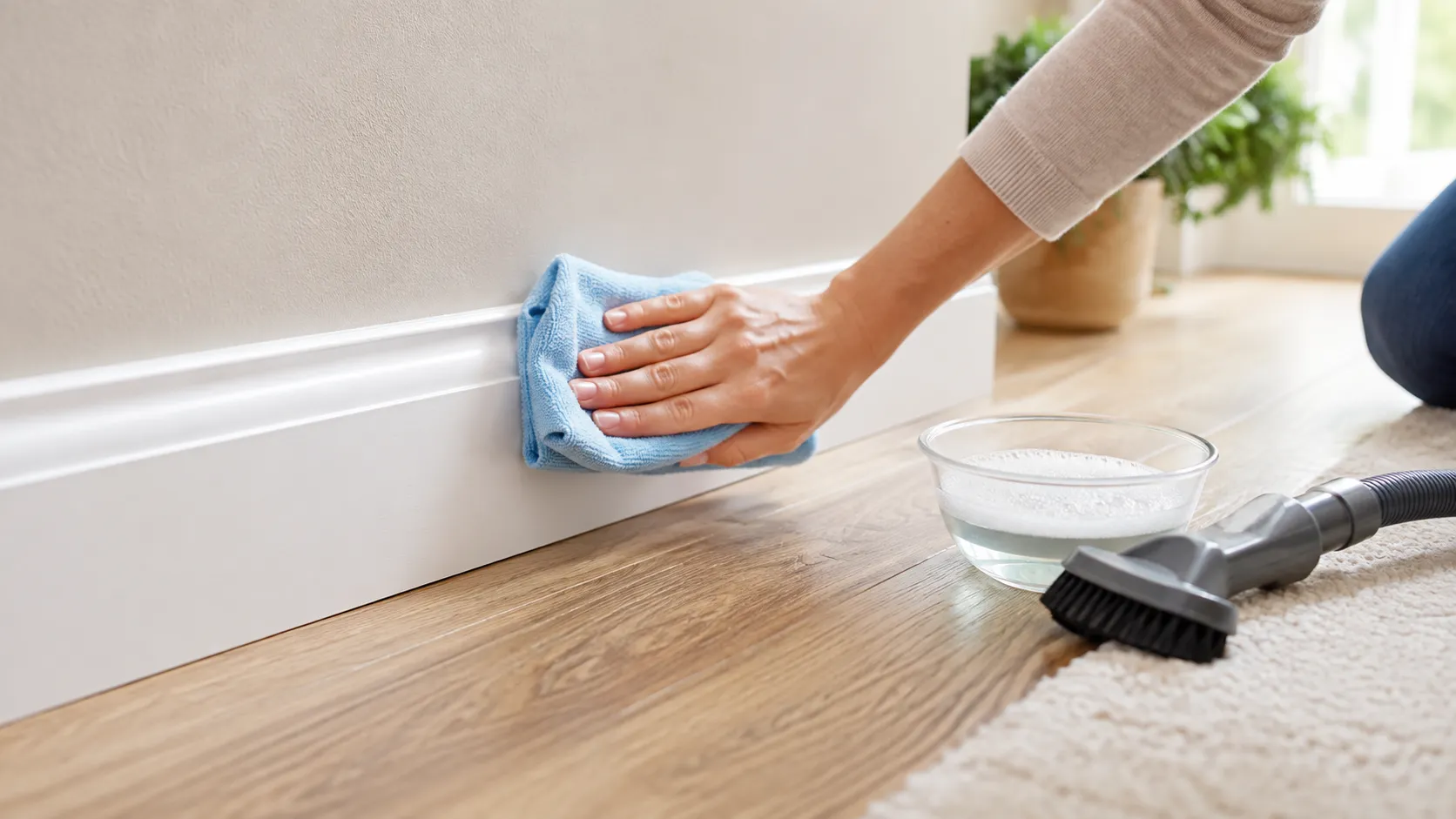
Baseboards collect a mix of loose dust, hair, floor debris, and occasional marks. The fastest way to clean them is to separate those problems instead of scrubbing the whole room from the start.
Begin with dry dust removal, then use a lightly damp cloth where washing is actually needed. Treat stubborn marks only after the general cleaning is finished, and adjust the method if the trim is painted, wood, MDF, or another material.
What You Need to Clean Baseboards
Routine baseboard cleaning is easier with a small set of basic tools. You need something for dry dust, something for a controlled damp wipe, and a clean cloth for finishing.
Gather these supplies before you start:
- A vacuum with a brush attachment or a clean microfiber duster
- Two or more microfiber cloths
- A small bucket or bowl
- Warm water
- A small amount of mild dish soap for compatible painted surfaces
- A clean, dry cloth
- A soft brush for grooves and corners if needed
You do not need to use every item in every room. If the baseboards are only dusty, vacuuming or dry wiping may be enough. Wet cleaning is most useful when ordinary dusting leaves visible grime behind.
Check the trim before adding a cleaner. Chipped paint, exposed MDF, unfinished wood, or an unfamiliar finish deserves more caution than intact painted trim.
The Quickest Way to Clean Baseboards Properly
A good baseboard-cleaning routine moves from the least aggressive step to the one that requires more contact with the surface. This keeps a simple dusting job from becoming unnecessary scrubbing.
Use this four-step sequence as the basic method:
- Remove loose dust and hair with a vacuum brush or dry microfiber tool.
- Wipe dirty areas with a well-wrung damp microfiber cloth.
- Treat remaining scuffs or stuck-on grime as individual spots.
- Wipe away remaining moisture with a clean, dry cloth.
That short sequence handles most routine cleaning. The details below help when a room has heavier buildup or trim that needs gentler treatment.
Remove Loose Dust First
Run the vacuum brush along the top ledge, front face, and lower edge of the trim. Corners and decorative grooves often hold debris that a quick pass across the flat surface misses.
A dry microfiber duster works well when using a vacuum is inconvenient. Work around the room in one direction so it is easy to see which sections are already finished.
Removing dry debris first also keeps loose dust from mixing with water during the next step. The goal is not to erase every mark yet, only to clear material that lifts off without washing.
Wipe With a Damp Cloth
For ordinary grime on compatible painted trim, use a microfiber cloth dampened with warm water and a small amount of mild dish soap. Wring it well so the cloth is damp rather than dripping.
Work in manageable sections and turn or rinse the cloth as it becomes dirty. A cloth loaded with grime can simply transfer residue farther along the baseboard.
Pay extra attention to the top edge and corners, but avoid flooding seams or leaving water pooled against the floor. More water does not make the job faster and may be unsuitable for some materials or damaged finishes.
Work on Marks That Remain
Once the general wipe is complete, inspect the baseboards for scuffs, sticky spots, or other marks that remain. Treat those areas individually rather than applying a stronger method everywhere.
If you are using a cleaner you have not tried on that finish, test it first in an inconspicuous area. Painted surfaces can be marred or their sheen altered by overly abrasive cleaners or heavy rubbing.
For greasy residue, start with a mild cleaner that is compatible with the existing finish. If that is not enough, follow the cleaner and coating manufacturer’s directions instead of simply increasing scrubbing pressure.
Dry the Baseboards
Use a clean, dry microfiber cloth to remove remaining moisture, especially around seams, corners, and the lower edge of the trim.
Letting the surface dry also makes it easier to judge the result. If one mark is still visible afterward, return to that spot instead of repeating the full wet-cleaning process.
How to Clean Baseboards Without Bending Over
Most routine dusting can be done from a standing position. A vacuum extension with a brush attachment or an extendable microfiber duster lets you reach the ledge and face of the baseboard without kneeling along the entire wall.

For a light wipe, an extendable microfiber cleaning tool can also cover broad, uncomplicated sections. Keep the cleaning pad only lightly damp and use enough pressure to make contact without grinding dirt into the finish.
Long-handled tools trade precision for reach. They are useful for dust and light grime, but tight corners, ornate molding, and isolated scuff marks may still need closer hand cleaning.
A practical approach is to clean most of the room while standing, then kneel only for the few sections that genuinely need detailed work.
Adjust the Method to the Baseboard Surface
A white baseboard may be painted wood, MDF, PVC, or another material, so color alone does not tell you how aggressively it can be cleaned. The existing finish and its condition matter just as much as the material underneath.
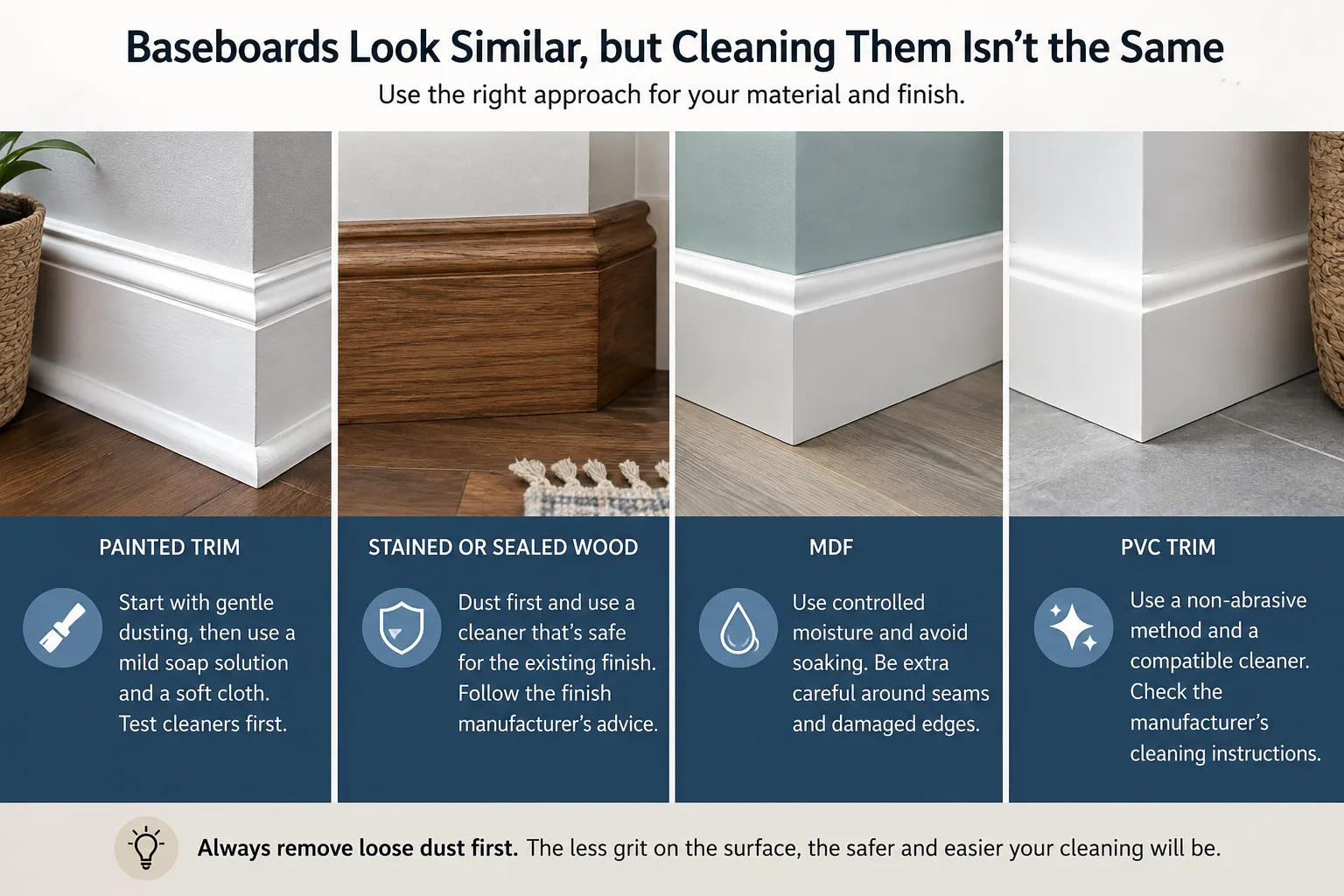
Use the table as a starting point, then follow the care instructions for the actual finish or trim product when they are available.
| Surface or situation | Safe starting point | What to check |
|---|---|---|
| Painted trim | Dust first, then use a gently damp non-abrasive cloth | Paint condition and cleaner compatibility |
| Stained or sealed wood | Remove dust and use a cleaner compatible with the existing finish | Finish or coating care instructions |
| MDF | Use controlled moisture and avoid soaking the surface | Chipped coating, exposed seams, or damaged edges |
| PVC trim | Start with a non-abrasive cleaning method | Manufacturer’s cleaning instructions |
Painted trim deserves particular care if you do not know which paint or sheen was used. A small hidden test can reveal a change in appearance before you clean a visible stretch of molding.
With MDF, the main concern is unnecessary moisture, especially where the protective coating is chipped or edges are exposed. Do not assume that every MDF baseboard needs to be cleaned dry, but avoid saturating it.
Wood trim can have many different finishes. A painted board and a stained, sealed board may both be wood underneath, yet the appropriate cleaner should be chosen for the coating you are actually touching.
How to Handle Dirty Baseboards and Scuff Marks
Heavily soiled baseboards usually need a second stage, not a completely different cleaning routine. Complete the normal dust-and-wipe process first, then focus on what remains.
Sticky residue, grease, and scuff marks should be handled as localized problems. Start with a soft cloth and a cleaner known to be compatible with the finish. Avoid jumping immediately to abrasive pads or aggressive scrubbing.
Watch the surface as you work. If a spot becomes duller, glossier, lighter, or otherwise different from the surrounding trim, stop and reassess the method.
Detailed profiles may look dirtier simply because debris collects inside grooves. A soft brush can loosen that buildup, but the goal is to lift dirt from the recesses rather than scrub through the finish.
This is the practical difference between routine cleaning and deep cleaning. A dusty bedroom may need only dry removal and a quick wipe, while a kitchen or entryway with adhered grime may require targeted follow-up.
Special Situations Around the House
The same basic method works in most rooms, but a few situations change what happens after dusting. Painting, carpet edges, and adjacent walls each add a separate surface or next step that deserves more control.
Cleaning Baseboards Before Painting
Baseboards should be free of dust and grime before repainting. Clean the trim according to the preparation directions for the paint system you plan to use, then allow the surface to dry before moving on.
Cleaning does not replace other preparation. Peeling paint, dents, gaps, or damaged surfaces may still need sanding, filling, priming, or repair as required by the product and condition of the trim.
Cleaning Baseboards Next to Carpet
Vacuum the carpet edge and the baseboard before using moisture. Hair and grit often sit where the fibers meet the trim, so removing them dry makes the next step easier.
When wiping the baseboard, use a well-wrung cloth and work in small sections. This gives you more control near the carpet than trying to wash the trim with a heavily wet cloth.
Cleaning Walls and Baseboards Together
If the walls need cleaning too, treat the wall and the trim as separate finished surfaces even when they are the same color. They may use different paint products or sheens.
Dust both areas first, then clean each surface with a method appropriate to its finish. Do not automatically extend a baseboard cleaner across the wall without checking compatibility.
How Often Should You Clean Baseboards
There is no single schedule that fits every room. An entryway, kitchen, rarely used guest room, and home with pets can accumulate different amounts and types of dirt.
A useful routine is to dust baseboards during regular floor care and wash them when visible grime remains after dusting. Fresh spills and obvious marks are better handled when they appear rather than saved for a future whole-room cleaning.
High-traffic rooms generally need attention sooner than quiet rooms because more dust, contact, and floor debris reach the trim. Instead of following a rigid calendar, use visible buildup and room use to decide when a damp cleaning is worthwhile.
This approach also prevents routine maintenance from becoming a large deep-cleaning job. Dust that is removed regularly is easier to deal with than layers of grime that have been left in place.
Keep Baseboards Cleaner With Less Work
Baseboards stay manageable when cleaning is tied to what is actually happening in the room. Include the top edge in ordinary vacuuming or dusting, and deal with fresh marks before they become part of a whole-room project.
The main goal is not to scrub harder or clean on a perfect schedule. It is to prevent loose debris from becoming buildup and to use stronger cleaning only where the surface and the dirt genuinely call for it.
Frequently Asked Questions
What is the fastest way to clean baseboards?
Remove loose dust and hair first with a vacuum brush or microfiber duster. Then wipe dirty areas with a well-wrung damp microfiber cloth. Treat remaining scuffs or stuck-on grime individually instead of scrubbing every baseboard more aggressively.
What is the best thing to use to clean baseboards?
For routine cleaning, start with a microfiber cloth, warm water, and a small amount of mild dish soap when it is compatible with the finish. A vacuum with a brush attachment is useful for removing dry dust before wiping.
How do you clean baseboards without bending over?
Use a vacuum extension with a brush attachment or an extendable microfiber duster for routine dusting. An extendable microfiber cleaning tool can also handle light wiping, although corners and stubborn marks may still require closer hand cleaning.
How do you clean painted baseboards without removing paint?
Start with a soft, non-abrasive cloth and the mildest cleaning method that removes the dirt. Keep the cloth damp rather than soaked, avoid aggressive scrubbing, and test an unfamiliar cleaner on an inconspicuous area before using it across the trim.
How often should you clean baseboards?
There is no single schedule for every home. Dust baseboards as part of regular floor care and wash them when visible grime remains after dusting. Kitchens, entryways, homes with pets, and other high-traffic areas may need cleaning more often.
How do you deep clean very dirty baseboards?
Begin with the normal dry-dusting and damp-wiping process before using anything stronger. Once the general dirt is removed, treat greasy residue, scuffs, and other stubborn marks individually with a method that is compatible with the baseboard material and finish.