When a property dispute makes it to the South Carolina Supreme Court on a petition for certiorari, that’s not a footnote — that’s a flare going up. It means the lower court’s decision wasn’t clean enough to let stand without another look, and that somewhere in the chain of appeals, something got decided in a way that bothers enough lawyers to keep fighting about it.
This particular case involves a coalition of town and property owners asking the state’s highest court to review an easement ruling that, depending on how you read the appellate decision, could affect how access rights are interpreted across coastal South Carolina. I’m not going to pretend I can predict what the court does. Nobody can. But if you’re buying or selling anywhere the easement question touches — and in Charleston County, Beaufort County, or along the Sea Islands, that’s more properties than you’d think — you need to understand what’s actually at stake and what you should be checking before you close.
What a Certiorari Petition Actually Means for Buyers and Sellers
The South Carolina Supreme Court doesn’t have to take every appeal. When a party petitions for cert, they’re asking the court to exercise discretionary review — essentially arguing that the lower decision was wrong on a point of law important enough to warrant correction. The court can deny the petition without comment, and the appellate decision stands. Or it can grant review, hear argument, and issue an opinion that resets the legal landscape.
That uncertainty is the problem for anyone in a transaction right now.
If you’re under contract on a property with a recorded easement that crosses it — or a property whose access depends on an easement over someone else’s land — you do not want to close while the state supreme court is sitting on a petition that could reframe how those easements are interpreted. The deal might still make sense. But you need to know what you’re buying, and your attorney needs to know this case is in the pipeline.
The Easement Questions That Keep Surfacing Along the Carolina Coast
Easement disputes on the Carolina coast tend to cluster around a few recurring situations.
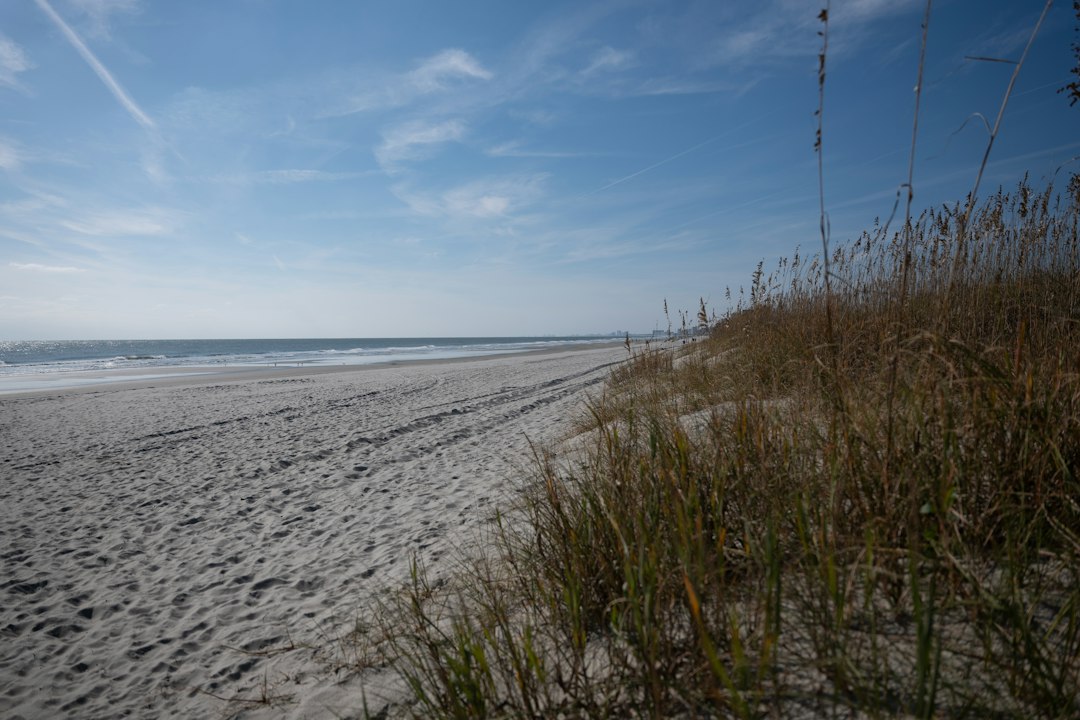
Beach and waterway access. Properties in older coastal subdivisions — places platted decades ago around the Lowcountry or along the Grand Strand — often have recorded “access easements” to the water, the beach, or a tidal creek. What those easements actually permit, who maintains them, whether they’re exclusive or shared, and whether they’ve been effectively abandoned through non-use: all of that is frequently murky. I’ve seen listings in the Beaufort area where the “deeded water access” turned out to be a 10-foot strip through a neighboring yard that nobody had walked in fifteen years.
Conservation and deed restriction crossovers. Some coastal parcels have overlapping interests — a recorded conservation easement held by a land trust on one side, a private access easement on another, and a town’s claimed maintenance easement on the road in front. When those interests conflict, you end up exactly where this case is headed: someone filing an appeal, someone else petitioning for more review.
Prescriptive easements. This is the messiest category. A prescriptive easement is one that someone claims based on years of open, continuous, hostile use — not a written document, but a habit. Courts have gone back and forth on the elements required to establish one in South Carolina, and a Supreme Court ruling that tightens or loosens those requirements can retroactively change the meaning of dozens of existing situations.
The Hilton Bluffs easement access lawsuit in the Wilmington area is a good parallel — different state, same pattern of parties fighting over access rights that everyone assumed were settled.
What to Check Before You Close on Any Property With an Easement
This isn’t a complicated checklist, but it has to be done in the right order.
- Pull the full title chain, not just the current deed. Easements often appear in documents recorded several conveyances back. A standard title search should catch them; a rushed or discounted one might not.
- Get the easement instrument itself, not just the reference. The recorded plat note that says “subject to easement as recorded in Book X, Page Y” tells you nothing about what that easement actually permits. Read the document.
- Ask your real estate attorney — not just your agent — whether there’s any pending litigation touching properties in that area or HOA. As of my last check, South Carolina doesn’t require automatic disclosure of litigation that doesn’t name the specific property, which means a dispute involving shared access could be ongoing without appearing on the seller’s disclosure form.
- Get title insurance that specifically covers easement-related claims. Standard policies have gaps. Ask for the enhanced residential owner’s policy and read what it does and doesn’t cover for access disputes.
- If the property’s value depends on a specific easement — water access, a shared dock, a right-of-way for the only driveway in — get a written legal opinion on that easement’s enforceability before you remove contingencies.
Worth confirming with your attorney: whether this Supreme Court petition, if granted, would affect easement interpretation broadly or only in the specific fact pattern of the underlying case. That distinction matters a lot for whether your property is actually in the blast radius.
Why Towns Are Involved
The fact that a municipality joined the property owners in petitioning for review is worth sitting with for a moment. Towns don’t spend political capital on appellate litigation unless they believe the lower court’s ruling creates a problem they can’t manage administratively. That usually means the ruling either expands private easement rights in a way that complicates public access, or it narrows easement rights in a way that leaves the town exposed on roads, utilities, or beach access corridors they’ve been maintaining under the assumption that they had legal authority to do so.
Either scenario has real property value implications. If a ruling clouds the town’s authority over a road or access corridor, maintenance could lapse, disputes could multiply, and title insurers could get twitchy about insuring properties that depend on that infrastructure.
Winnabow residents who sought court review of a controversial development in Brunswick County went through a similar process — private parties and community interests aligned to push a legal question up the appellate ladder. The outcome shaped how that land could be developed. This is how land law actually moves: slowly, expensively, and in ways that affect everyone downstream who never knew the case existed.
What You Can Do Right Now
If you’re buying in coastal South Carolina — particularly in older communities, waterfront subdivisions, or any property where access isn’t through a dedicated public road — ask your closing attorney to run a search for pending litigation involving the easements, roads, or access corridors shown on your plat.
It costs less than a survey and takes less time than waiting to find out after closing that the easement your dock depends on is the subject of a Supreme Court petition.
I wouldn’t close on a lot with contested access without that answer in writing. The water’s beautiful on both sides of the Lowcountry. The paperwork underneath it deserves the same attention.